
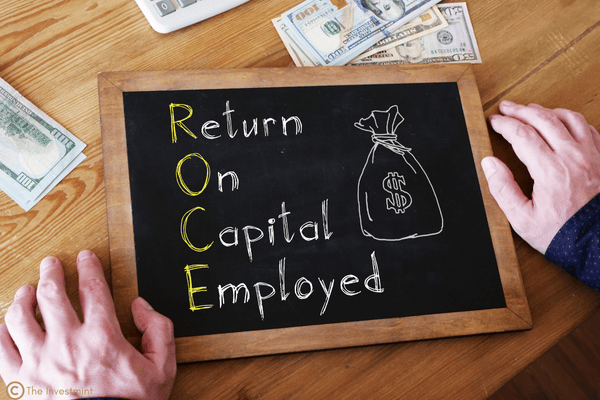
For a long time, I thought that growth was the ultimate indicator of success. If a company’s revenue was increasing, it must be doing something effectively. If profits were rising, it had to be creating value.
That perspective remained with me until I gained a true understanding of Return on Capital Employed (ROCE)—and recognised how deceptive surface-level growth can be. This isn’t merely a financial explanation of ROCE. This is a personal reflection on how ROCE transformed my approach to assessing businesses, the quality of management, and even the concept of success itself.
Table of Contents
What Is Return on Capital Employed (ROCE)?
Return on Capital Employed (ROCE) is a key indicator that reveals how effectively a company turns its invested capital into operating profit. It’s all about efficiency—this metric showcases how well a business is utilising its resources to drive profits and fuel growth. Understanding ROCE can provide valuable insights into a company’s financial health and operational performance!
ROCE Formula:
ROCE = EBIT ÷ Capital Employed
Where:
- EBIT = Earnings Before Interest and Taxes
- Capital Employed = Total Assets − Current Liabilities
(or Equity + Long-Term Debt)
In simple terms, ROCE tells you how hard your money is working inside a business.
When Profit Stopped Telling the Truth
I once delved into the financials of a company that seemed flawless at first glance.
- Their revenue was on a steady upward trajectory year after year, painting a picture of robust growth.
- Profits appeared to be consistently strong, adding to the illusion of a thriving enterprise.
- The narrative surrounding the company was compelling, filled with promises of innovation and market expansion.
Despite these surface-level indicators, an unsettling intuition began to nag at me.
The company seemed to be perpetually amassing debt, adding layers of financial leverage that raised red flags. Equity dilution became alarmingly frequent, signalling that they were resorting to issuing more shares to support their operations. Meanwhile, cash flow always appeared to be constrained, as if the company was skirting the edges of financial security.
Driven by curiosity, I decided to crunch the numbers and calculate its Return on Capital Employed (ROCE). To my surprise, the figure turned out to be shockingly low, starkly contrasting the vibrant façade.
That eye-opening moment imparted a hard lesson: not everything that glitters on paper truly shines in reality.
Profit can lie. ROCE rarely does.
How ROCE Changed the Question I Asked
Before delving into the concept of Return on Capital Employed (ROCE), my initial focus was straightforward: “Is this company profitable?” I primarily concentrated on the bottom line and surface-level profitability metrics.
However, after gaining a deeper understanding of ROCE, my perspective evolved significantly. No longer was I just interested in whether the company turned a profit; I began to ask a more critical question: “Is this company utilising its capital responsibly?” This shift in focus fundamentally transformed my analysis.
I realised that I had been too quick to celebrate mere effort and growth. Instead, I began to prioritise efficiency and sustainability in operations. I ceased to applaud expansion without scrutiny and began actively questioning how this expansion was financed. This newfound emphasis on responsible capital utilisation led me to a more nuanced and informed evaluation of companies and their true operational health.
Why ROCE Matters More Than Growth
The allure of growth can be irresistible. However, it’s crucial to understand that growth is not inherently synonymous with health. My experience with Return on Capital Employed (ROCE) has shed light on some important truths:
- Every unit of growth requires an infusion of capital.** This means that as a business expands, it must allocate resources, which ties up funds in new initiatives or infrastructure.
- Capital comes with its own costs. Whether through interest on borrowed funds or the opportunity cost of equity, the cost of acquiring and using capital is always a consideration.
- When the returns on that capital are low, growth can actually harm the business’s overall value. If a company expands without generating sufficient returns on the capital employed, it risks diminishing its value rather than enhancing it.
A business that pursues growth at the expense of declining ROCE is not genuinely progressing; it is merely consuming potential future profits in the present.
This understanding has been invaluable for me, as it has helped me avoid numerous poor investment choices that could have jeopardised my financial success.
ROCE Reveals Management Quality

Reflecting on my observations, I recognised the importance of Return on Capital Employed (ROCE) in assessing business performance. Companies with high ROCE demonstrate prudent strategies, focusing on sustainable growth and efficiently managing resources. They quickly shut down inefficient operations and avoid excessive debt, respecting shareholder capital as a valuable resource.
In contrast, organisations with low ROCE often prioritise growth and visibility over genuine value creation. This can lead to overinvestment and diluted equity, diminishing shareholder value. They may confuse activity with progress, losing sight of true operational effectiveness.
Ultimately, ROCE is a crucial indicator that differentiates those committed to lasting value from those expanding without a solid foundation.
The Power of Consistent ROCE Over Time
At first, my focus was solely on targeting companies that exhibited the highest return on capital employed (ROCE). In hindsight, I realise that this approach had its downsides. The short-lived spikes in ROCE can often be misleading, as they have a tendency to fade away over time. What truly holds significance in the investment world is the consistency of performance.
Companies that demonstrate:
- Stability in their financial metrics
- Sustainability in their business models
- Long-term maintenance of ROCE
are the ones that quietly develop and grow wealth for their investors over time. In the realm of investing, it becomes evident that consistency triumphs over mere brilliance. It’s the dependable performers that ultimately secure lasting success.
ROCE vs ROE: Why I Trust ROCE More

Return on Equity (ROE) may seem appealing at first glance, but it’s important to note that this metric can often be artificially boosted by the use of debt. In contrast, Return on Capital Employed (ROCE) provides a more comprehensive view of a company’s financial health.
ROCE considers both equity and debt, providing a clearer picture of how efficiently a company utilises its total capital. Additionally, it is more resistant to manipulation, making it a more reliable indicator of performance. For these reasons, I prioritise ROCE as my primary screening tool when evaluating investment opportunities, rather than using it as a secondary measure.
ROCE and Cash Flow: A Reality Check
A high Return on Capital Employed (ROCE) paired with a lack of cash flow can signal potential problems. The most successful businesses typically exhibit three key characteristics:
- 1. Strong ROCE: This metric illustrates how effectively a company is generating profit from its capital, showcasing its operational efficiency.
- 2. Healthy Operating Cash Flow: This indicates that the company not only has profitability on paper but is also generating real cash from its operations, which is crucial for sustainability.
- 3. Disciplined Capital Allocation: Successful companies strategically manage their investments, ensuring that resources are directed towards areas that will generate the highest returns.
In essence, while Return on Capital Employed serves as a gauge of a business’s efficiency, robust cash flow is essential to validate that this efficiency translates into actual financial performance.
What ROCE Ultimately Taught Me
The lessons I learned from ROCE extend far beyond the realm of investing; they resonate deeply with various aspects of life. It revealed to me that:
- Putting in effort without a focus on efficiency can lead to burnout and fatigue, draining both energy and creativity.
- Experiencing growth without established discipline often leads to a precarious situation that can result in failure or collapse, no matter how promising the prospects may seem.
- Achieving success without a mindful respect for the resources at hand can create a fleeting victory, one that is unlikely to stand the test of time.
In both business and personal endeavours, the way you utilise what you have is far more critical than the sheer quantity of resources you possess. It’s about making the most of your opportunities and nurturing a sustainable approach to growth and success.
Also Read: Decoding Financial Ratios: How EPS, P/E, EBITDA, ROE, and ROCE Reveal a Company’s True Worth
Final Thoughts: Why ROCE Is a Truth Serum
Return on Capital Employed (ROCE) is an unwavering metric that remains indifferent to the stories and narratives that often surround a company’s performance. It doesn’t get swayed by the thrill of market excitement or the transient buzz of news and trends. Instead, it poses a fundamental question: “How effectively do you utilise the capital entrusted to you?”
Companies that truly value capital and manage it wisely tend to reward their shareholders handsomely. In contrast, those that squander resources inevitably face adverse consequences. Once I grasped the true significance of ROCE, my approach shifted dramatically. I moved away from the relentless pursuit of growth at any cost and began to seek out quality in the companies I engaged with. This change in mindset transformed my investment strategy and the outcomes that followed